Showing Posts From
Art
-
 Michelle Moyer
 - 16 Mar, 2026
All About Artist Trading Cards
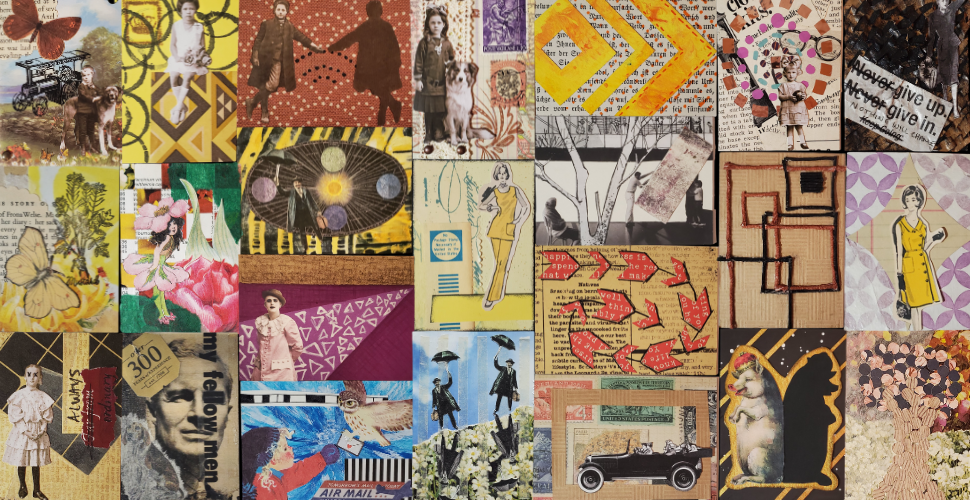
I was introduced to artist trading cards in my high school painting class, and didn't think much of them at the time. The format stuck somewhere in the back rooms of my brain, and I came back to it years later. Now they're one of the main ways I make art. Making ATCs removes just enough friction for me to actually start, and require less time than larger-format art so I actually complete them, with motivation to do more and more. What are Artist Trading Cards Artist trading cards (ATCs) are small pieces of art meant to be traded between artists. The only strict rule is the size: 2.5 x 3.5 inches. They can be:collage drawing painting photography mixed mediaMost people keep them relatively flat so they can be easily mailed in an envelope, and stored in binder sleeves, but even that gets pushed depending on the artist. They can be made in one-off pieces, or in small series. The small size makes it easy to explore a theme without committing to something large. ATCs vs ACEOs You'll also see ACEOs (Art Cards, Editions, and Originals). Same size, different intent: ATCs are traded, ACEOs are sold. In practice, a lot of artists do both. Why I use ATCs instead of larger pieces They lower the barrier to starting A full-size piece feels like a commitment. ATCs dont. I can sit down and finish something in one session, which means I'm more likely to actually do it and finish it. That matters more than making something "important." They're where I experiment Most of what I try out happens in this format first. Different materials, layering techniques, compositions - ATCs let me test ideas quickly without overthinking them. Some of those ideas carry into larger work later, but a lot of them just stay here. They build momentum. Because they're small, I end up making more of them. That repetition matters. You start to notice patterns in what you're drawn to, what you avoid, and what actually works. It's less about individual pieces and more about what accumulates over time. Trading changes the process Knowing the piece is going to someone else shifts how I make it. Not in a "make it better" way, but in a "this will leave my space" way. I keep the cards I receive in a binder, and it's one of the most interesting collections I have - completely different styles, materials, and approaches that I wouldn't have made myself. How I actually make mine Most of my ATCs are paper collage on a sturdy backing. My process is pretty simple:I cut a stack of 2.5 x 3.5 inch blanks ahead of time so I always have them ready I use heavier paper, chipboard, or watercolor paper so they don't feel flimsy I build up layers using old book pages, printed materials, and scraps Sometimes I add paint or ink over the top to tie everything togetherI don't sketch them out ahead of time. It's more about assembling and adjusting as I go. What I wish I knew earlier You don't need to overthink the format The size feels restrictive at first, but it actually does the opposite. Once you stop trying to make something "perfect", it becomes easier to just make something. Series work better than single cards Making one card in isolation is harder than making five around a loose idea. Even if the theme is vague, having a direction helps. The backing matters Early on, I made some on thinner paper, and they didn't hold up well. A sturdier base makes a big difference, especially if you're mailing them. Where to swap OnlineSwap-bot.com: Structured swaps with themes, assigned partners, and a rating system. Easy to get started. ATC for All: Similar format, also centered around themed swaps Illustrated ATCs: More selective. Requires an application and portfolio reviewIn person Harder to find, but worth it if you can. Seeing the cards in person changes how you think about them - especially texture and layering, which doesn't always come through in photos. Practical details On the back of each card, I include: name date title (if there is one) series number (if applicable) name/theme of swap (if applicable)I use a simple printed template so I don't have to rewrite everything each time. For mailing, I put each card in a clear card sleeve, then tape into a greeting card to protect it. Final thought ATCs aren't about making something perfect or even something that lasts. They're useful because they're small enough to finish. And finishing something - over and over again - is what actually builds a practice. If you're starting Start with whatever materials you already have and make a few in a row. Not just one, a few. That's when the format starts to make sense.